Geared or single-speed cycle? Let your route decide
Choose a geared or single-speed cycle for your actual route. Learn what gear counts miss, how to test a bicycle and which maintenance questions to ask.
A cycle showroom makes gears look easy to compare. One bicycle has seven. Another has twenty-one. A third has no shifter at all. The numbers sit neatly on a specification card, while the reason for choosing one remains somewhere outside, on the road home.
That road is the better starting point. A short flat ride, an uphill commute and a weekend route with changing gradients ask different things of a bicycle. The right drivetrain is the one that lets you keep pedalling comfortably through the conditions you actually meet.
For a new rider, choosing between a geared cycle and a single-speed cycle need not become a lesson in every bicycle component. Understand what the gears change, try both arrangements on a useful route, and look beyond the count.
The quick answer
A single-speed cycle can suit short, mostly flat rides when its one gear feels comfortable and you value a simpler drivetrain. A geared cycle gives you different ratios for climbs, starts, headwinds and faster sections. It is usually the more adaptable choice when your route or riding plans vary.
Neither choice guarantees a better bicycle. Fit, brakes, tyres, overall condition and service support still need checking. Gears cannot fix a frame that does not fit, and a simple drivetrain does not make worn brakes acceptable.
What “non-geared” actually means
The term “non-geared cycle” usually describes a single-speed bicycle: one front chainring and one rear sprocket, with no selectable gears. It still has a gear ratio. You simply cannot change that ratio while riding.
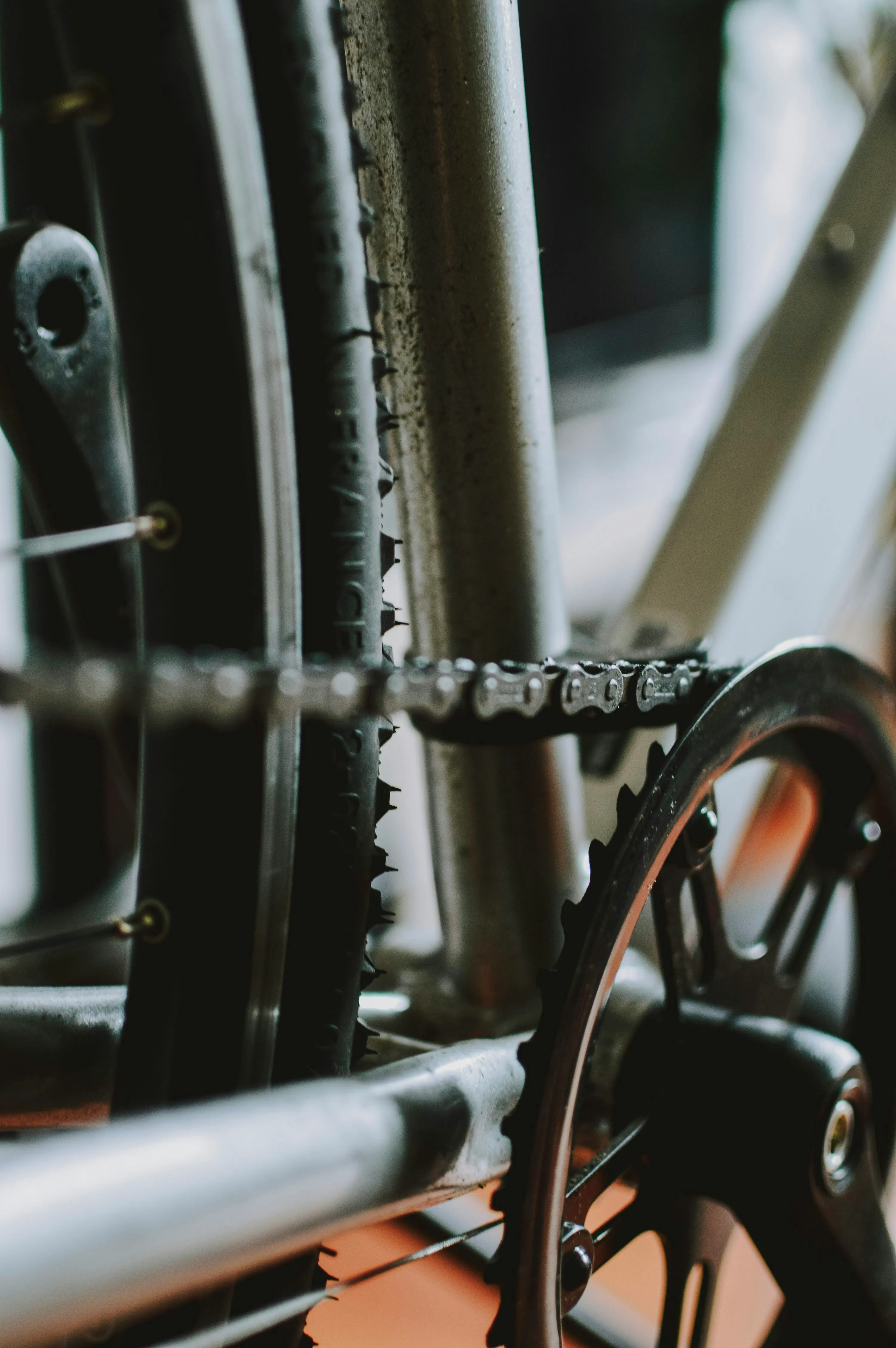
On a conventional derailleur-equipped geared cycle, the chain can move between different rear sprockets and, on some bikes, different front chainrings. The selected combination changes how far the wheel turns for a turn of the pedals.
An easier gear lets you turn the pedals with less force for each stroke, while the cycle travels less distance per pedal turn. A harder gear takes more force and moves the cycle farther per turn. This gives you a way to match the effort to the conditions instead of asking your legs to handle every situation with the same ratio.
There is also a third arrangement: internal hub gears. These put the gear mechanism inside the rear hub rather than using an exposed derailleur and cassette. Their operation and service requirements differ. “Geared cycle” is therefore a broad category, even if the shop mainly stocks derailleur models.
Start with the hardest recurring part of your ride
The easy stretch will make almost any reasonable cycle feel persuasive. The harder stretch reveals the trade-off.
Think about the climb you meet every evening, the bridge ramp after a traffic light, or the repeated starts on the way to work. A single-speed ratio that feels pleasant on a flowing flat road may feel heavy when you need to start uphill. A ratio chosen to make that climb easier can feel busy under your feet on faster flat sections.
Gears let you change that compromise while riding. Select an easier ratio for a climb or a start, then a harder one when the road and speed allow. They do not remove the work of cycling; they let you distribute it differently across pedal force and pedalling speed.
That can be useful even on a route that looks flat on a map. Wind, luggage and stop-start riding can change the effort. Conversely, a rider with a short, predictable flat route may find one well-chosen ratio entirely satisfactory.
Write a brief route description before shopping: distance, gradients, stops, luggage and the type of surface. Those details explain more than a target gear count.
Why twenty-one gears do not automatically beat seven
A common multi-chainring drivetrain gets its quoted number by multiplying the front chainrings by the rear sprockets. Three chainrings and seven rear sprockets produce twenty-one combinations. Those combinations are not necessarily twenty-one evenly spaced, distinct riding sensations. Some ratios overlap.
A single front chainring with multiple rear sprockets can still provide a useful spread of gears, with one shifter to manage. It is not a single-speed system merely because there is only one ring at the pedals.
Ask about the lowest useful gear and the overall range. Will the easy end make your regular climb manageable? Can you pedal comfortably at your normal speed? Are the jumps between gears comfortable? These questions are more informative than choosing the largest printed number.
If a seller can identify the chainring and sprocket tooth counts, ratios can help with comparison. For a straightforward derailleur or single-speed drivetrain, divide front teeth by rear teeth. A 40-tooth front ring with a 20-tooth rear sprocket gives 2.0; with a 40-tooth rear sprocket it gives 1.0. On the same wheel size, the latter is easier. These are illustrative calculations, not recommended specifications for every rider. Wheel size also affects how a ratio feels.
You do not need to calculate every option in the shop. You do need to know whether the easy gear is genuinely easy enough for your route.
Single-speed simplicity has real benefits and clear limits
A single-speed drivetrain has fewer shifting components to adjust. There is no rear derailleur to index and no gear cable to set up on a conventional cable-shift system. For a rider who wants straightforward local trips, that simplicity can be appealing.
It still needs care. The chain, sprocket, chainring and bearings wear. Chain tension and alignment matter, and the brakes and tyres need the same attention they would on any other cycle. “Less to adjust” is a reasonable expectation; “maintenance-free” is not.
The limit is the fixed choice of ratio. If the route becomes hillier or you begin carrying more luggage, you cannot reach for an easier gear mid-ride. A workshop may be able to change compatible components, but that creates a different single compromise, not selectable gearing.
Buy a single-speed because you have tried its ratio and it suits your riding. Avoid buying it solely because learning to shift feels intimidating. Shifting is a skill you can practise, and a short lesson may change which bicycle feels accessible.
Geared cycles ask for a little technique
For a conventional derailleur drivetrain, shift while the pedals are turning and briefly ease pressure as the gear changes. Anticipate a climb rather than waiting until you are almost stationary and pushing hard. Before a stop, choose a gear that will make the next start manageable.
Start on a quiet stretch. Use one shifter at a time if the cycle has both front and rear shifting. Notice which direction makes pedalling easier. Work through a few gears while keeping your effort gentle. The aim is to associate the control with the feeling, rather than memorise a diagram before your first ride.
Avoid forcing changes under heavy load. On multi-chainring systems, avoid the extreme chain angles described in the manufacturer’s guidance, often called cross-chaining. If the chain repeatedly jumps, grinds or refuses to shift cleanly, have the adjustment checked rather than assuming that is normal.
Internal hub gears can have different shifting instructions, including the ability to select gears while stopped on many systems. Use the instructions for the actual drivetrain instead of applying derailleur technique to every bicycle.
Single-speed and fixed-gear are different
A conventional freewheel single-speed lets you coast without turning the pedals. On a fixed-gear bicycle, the pedals keep moving when the driven wheel turns. The two may look similar in a photograph, but the riding behaviour differs.
Ask which mechanism is fitted. If you want a simple everyday bicycle and expect to coast, confirm that it has a freewheel. Do not use “fixie” as a casual substitute for every bicycle without shifters.
Braking equipment and any local legal requirements also need checking. This guide does not recommend riding without proper brakes or treat pedal resistance as a replacement for them.
A test ride that answers the buying question
Try bicycles that fit you, with properly set-up brakes and tyres. A poorly adjusted test bike can distort the comparison. If possible, use the same short route for both.
Include a start from rest, a gentle climb, an ordinary cruising section and a controlled stop somewhere safe. Use a typical small load if the shop allows it. Do not turn the ride into a sprint; you are testing the rhythm you can live with.
On the single-speed, ask: Can I start without straining? Can I climb without immediately wanting a different ratio? Does normal cruising feel comfortable?
On the geared cycle, ask: Is the easiest gear useful? Can I operate the shifter confidently? Does the chain change cleanly? Can I find a comfortable pedalling rhythm without constantly searching between gears?
After either ride, notice reach, saddle comfort and steering as well. If both drivetrains work for the route, the bicycle that fits better may be the clearer choice.
Compare ownership, not just the purchase ticket
Ask the shop what a normal drivetrain service includes, which replacement chains and sprockets it supports, and who will handle adjustments after purchase. Do not assume the cheapest bicycle will necessarily be cheapest to keep riding, or that more gears inevitably mean frequent trouble.
For a used cycle, condition can outweigh the theoretical benefits of either arrangement. Check for chain skipping, damaged teeth, rough bearings, bent shifting components and poor braking. If you cannot assess those reliably, have a workshop inspect it before paying.
You can keep the decision simple. A comfortable single-speed on a suitable route is a valid choice. A geared cycle with usable low ratios is a sensible way to accommodate hills and changing plans. Choose the mechanism after the route, then choose the bicycle after the test ride.
Questions riders ask
Is a gear cycle faster than a single-speed?
Gears give you different ratios; they do not supply extra power. Speed depends on the rider, conditions, bicycle and chosen gearing. More gears alone cannot establish which cycle will be faster for you.
Is a single-speed suitable for fitness rides?
It can be, if its ratio and your route suit you. Fitness riding does not require a particular number of gears. Selectable gears can make varied terrain easier to manage at a comfortable effort.
Can a beginner use a geared cycle?
Yes. Ask for a short shifting lesson and practise on a quiet route. Start with the controls on the particular cycle you are buying, rather than learning rules for a different drivetrain.
Should I choose seven or twenty-one gears?
Compare the useful gear range, the lowest ratio, fit, component condition and service support. The count alone does not answer the question. A test ride on a representative incline is more useful than a bigger number on the frame.
A bicycle earns its place in your week by being pleasant enough to ride again. Choose for the difficult turn on the journey home, and the easy stretches will usually take care of themselves.
Sources
- REI, How to use bike gears: drivetrain parts, hub gears, shifting under reduced load and cross-chaining.
- Surly, Single speed gearing 101: tooth ratios, wheel-size effect and single-speed trade-offs.
- BikeRadar, Buyer’s guide to fixies and singlespeed bikes: fixed-gear versus freewheel.
- Cover photo: Glenn Carstens-Peters via Unsplash, Unsplash licence. The useful gear ratio matters more than the headline count.